IDD Therapy - Non Surgical Spinal Decompression
What Is IDD Therapy?
Intervertebral Differential Dynamics (IDD) Therapy is a non-surgical treatment designed to relieve chronic neck and back pain caused by spinal disc problems. It is a gentle, non-invasive form of spinal decompression that helps reduce pressure on injured discs and nerves.
IDD therapy is delivered using the Accu-SPINA spinal decompression system, an FDA-cleared Class II medical device. The treatment is intended for individuals who continue to experience pain despite other conservative treatments and who wish to avoid surgery.
IDD therapy was developed by Dr. Norman Shealy in collaboration with neurosurgeons and orthopaedic surgeons, integrating medical and surgical expertise to support spinal decompression and healing.
How IDD Therapy Works
IDD therapy uses computer-controlled distraction forces to gently separate specific spinal vertebrae. Unlike standard traction, the system precisely targets the injured spinal level.
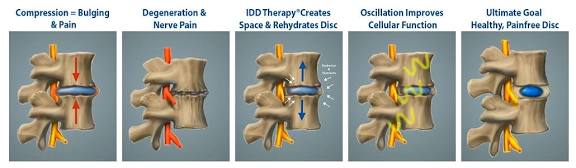
By carefully opening the disc space, IDD therapy creates negative pressure inside the disc, which helps to:
- Reduce pressure on spinal nerves
- Lower internal disc pressure
- Encourage bulging or herniated disc material to move away from nerves
Clinical Results
Up to 92% of patients recommended for surgery were able to avoid it [1]
Approximately 86–92% experienced good to excellent improvement in pain and function [2]
Studies reported average pain reductions of 65–76% following completion of IDD therapy, with sustained improvement at long-term follow-up [3]
Clinical research has demonstrated improvements in functional capacity, mobility, and daily activity tolerance [4]
MRI-based studies have shown measurable reductions in disc herniation size following treatment [5]
What Happens Inside the Disc
Spinal discs rely on movement and pressure changes to receive oxygen, water, and nutrients. When a disc is compressed or degenerated, this exchange is reduced, slowing healing.
IDD therapy helps restore this process by:
- Improving fluid movement into the disc
- Rehydrating degenerated disc tissue
- Supporting disc metabolism and repair
At the same time, surrounding muscles and ligaments are gently stretched, reducing stiffness and muscle spasm.
Benefits of IDD Therapy
Patients commonly experience:
- Reduced neck or back pain
- Decreased nerve-related symptoms such as sciatica
- Improved range of motion
- Reduced muscle tightness and spasm
- Improved posture and spinal alignment
- Relaxation through natural endorphin release
Sessions are designed to be comfortable and calming.
Conditions Treated
IDD therapy may be recommended for:
- Herniated or bulging discs
- Degenerative disc disease
- Sciatica
- Facet joint syndrome
- Cervical radiculopathy
- Chronic neck pain
- Chronic low back pain
It is especially helpful for symptoms lasting three months or longer.
When IDD Therapy Is Not Appropriate
IDD therapy is not suitable for patients with:
- Cauda equina syndrome
- Spondylolisthesis (Grade II or higher)
- Severe osteoporosis
- Recent spinal surgery or fractures
- Spinal implants or hardware
- Pregnancy or early postpartum period
- Metastatic disease
- Severe scoliosis or congenital spinal abnormalities
- Pacemakers
- Patients under 18 years of age
A full clinical evaluation is required before treatment.
Treatment, Outcomes, and Recovery
What to Expect
Sessions last 45–60 minutes
Typically 3 times per week for 6–8 weeks
Before IDD therapy, far infrared (FIR) heat may be applied to the affected area. FIR gently penetrates deep into muscles and soft tissues to increase blood circulation, relax tight muscles, improve tissue flexibility, and prepare the spine for safe and effective decompression.
Following the session, ice packs or cold therapy may be used to reduce post-treatment inflammation, minimize muscle soreness, calm irritated tissues, and support recovery after spinal decompression.
Measuring Progress
Visual Analog Scale (VAS) for pain
Functional Rating Index (FRI) for daily function
Outcomes
Clinical studies show meaningful pain reduction, improved mobility, and long-term functional improvement. Many patients are able to avoid spinal surgery and return to normal activities with greater comfort and confidence.
References
- Shealy CN. Long-term outcomes of Intervertebral Differential Dynamics (IDD) therapy in patients recommended for spinal surgery. Journal of Neuromusculoskeletal Medicine.
- McClure PW, Farris JW. Clinical outcomes of IDD therapy in patients with chronic neck and low back pain. Journal of Back and Musculoskeletal Rehabilitation.
- Shealy CN. Pain reduction and functional improvement following non-surgical spinal decompression therapy. American Journal of Pain Management.
- Demirel A, et al. Effects of non-surgical spinal decompression on pain, function, and disc morphology: A randomized controlled trial. Clinical Spine Surgery.
- Demirel A, et al. MRI evaluation of disc herniation changes following spinal decompression therapy. European Spine Journal.
Location

Our Team